U.S. Government Clears Path for Anthropic’s Most Powerful AI Models: What SMBs and Non-Profits Must Do Now
U.S. Government Clears Path for Anthropic’s Most Powerful AI Models: What SMBs and Non-Profits Must Do Now
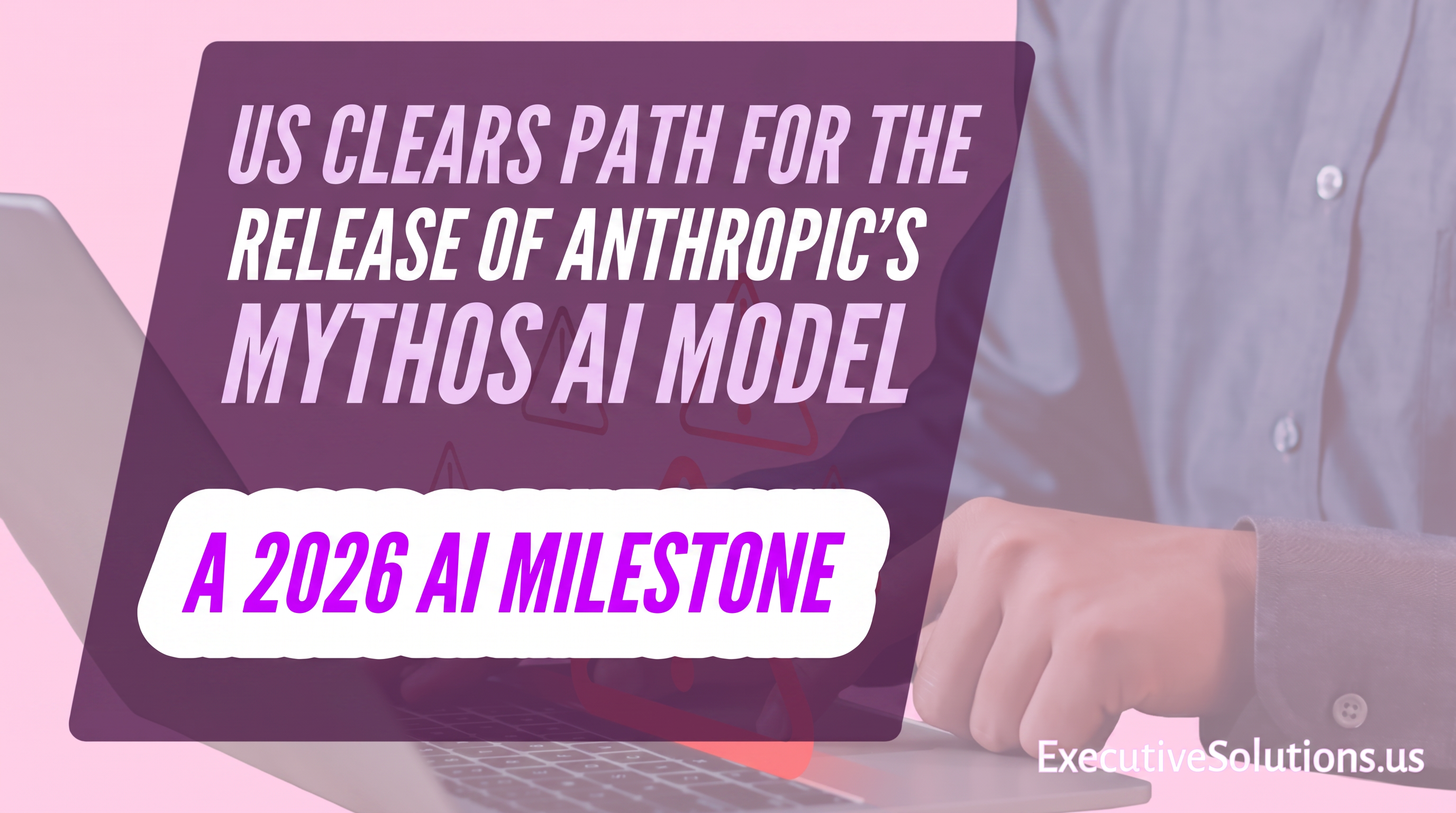
On June 30, 2026, Anthropic announced that the Trump administration lifted export controls on its advanced Claude Fable 5 and Mythos 5 models, restoring broader access starting July 1. This marks a significant development in America’s push to lead in artificial intelligence while navigating real security concerns.
These models represent frontier capabilities. Fable 5 includes robust safeguards designed to reduce misuse risks.
Mythos 5, the more open version, was previously limited to select organizations.
Their wider release puts highly capable AI tools into more hands—including those of potential adversaries.
Why This Matters for Small and Medium Businesses
For small and medium-sized businesses (SMBs) and non-profits, this is not abstract tech news.
Powerful AI models now publicly available lower the barrier for cybercriminals. What once required teams of skilled hackers can increasingly be automated or accelerated with AI assistance: discovering vulnerabilities, crafting convincing phishing campaigns, generating malicious code, or analyzing stolen data at scale.
Many SMBs and non-profits already operate with lean IT and security resources. They often lack dedicated security teams, advanced monitoring, or the budget for enterprise-grade defenses. When attackers gain access to frontier AI capabilities, the asymmetry grows. Organizations that have not yet built strong fundamentals become even more attractive targets.
The Specific Risk: Uncontrolled AI Use Inside Your Organization
Beyond external threats, the release of these models increases internal risk. Employees, volunteers, and contractors now have easier access to extremely powerful AI.
Without clear rules, sensitive organizational data, donor information, client records, or strategic plans can easily be pasted into public AI tools—creating permanent data exposure.
This is why Acceptable Use of AI policies, procedures, and guidelines are no longer optional. They define what data can (and cannot) be used with AI tools, which platforms are approved, how outputs must be reviewed, and the consequences of violations. Without them, even well-intentioned staff can unintentionally create serious security and compliance exposures.
What SMBs and Non-Profits Should Do Immediately
- Audit current AI usage — Identify which tools your team already uses and what data is being shared.
- Develop and implement an Acceptable Use of AI policy — Cover approved tools, data classification rules, review requirements, and training.
- Strengthen core cybersecurity fundamentals — Enforce multi-factor authentication everywhere, maintain tested backups, apply patches promptly, and run regular security awareness training.
- Establish oversight and monitoring — Assign responsibility for AI governance and incident response involving AI tools.
- Consider expert guidance — A virtual CISO (vCISO) can help right-size these efforts without the cost of a full-time executive.
Key Takeaways
- The release of Anthropic’s most advanced models is a net positive for U.S. AI leadership, but it also expands the threat landscape.
- SMBs and non-profits face heightened risk due to limited resources and the democratization of powerful offensive AI capabilities.
- Strong cybersecurity fundamentals remain the foundation; Acceptable Use of AI policies are now a critical layer on top.
- Proactive preparation is far less expensive than responding to a breach enabled by these new tools.
Author: George Bakalov